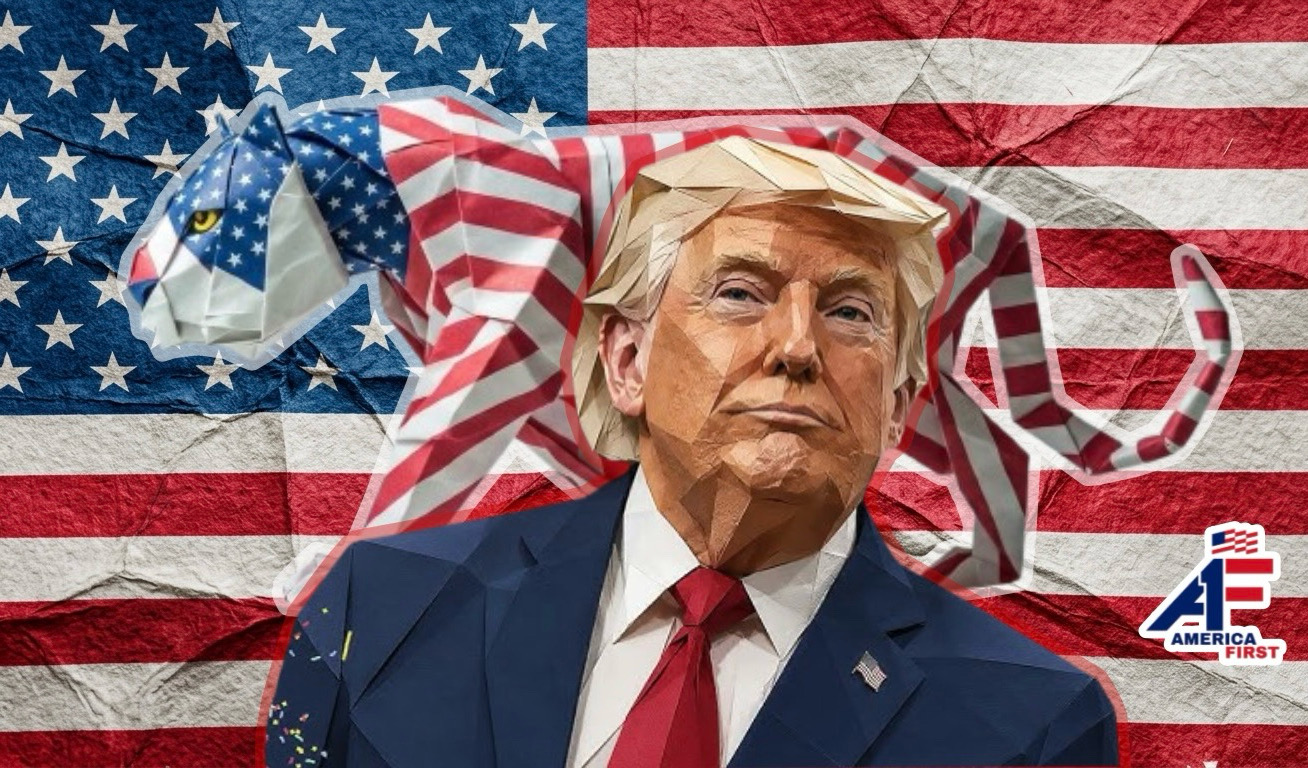
The world only respects strength. It always has, and it always will. This is the immutable law of nations, a truth carved into history by the rise and fall of empires. For decades, the United States has stood as the singular, unrivaled superpower, a colossus whose might guaranteed a certain global order. But strength is not a static asset; it is a dynamic expression of will. And right now, under the hesitancy of President Trump, that will is crumbling. We are rapidly becoming a paper tiger, a fearsome image printed on frail material, a roar that terrifies no one because our adversaries have seen our claws are sheathed in hesitation.
Let us be perfectly clear about the core issue corroding our national posture: the grotesquely protracted conflict with Iran. The decision to prevent the mullahs in Tehran from obtaining a nuclear weapon was not merely a strategic choice; it was a historical and moral imperative. Any American who disputes this, who naively believes that a regime whose foundational chant is “Death to America” can be deterred by the same rational frameworks that kept the Soviet Union in check, is living in a fantasy. This is not a partisan statement; it is a statement of basic reasoning and self-preservation. A nuclear Iran is an existential threat, not just to its region, but to the American homeland. Those few who now protest the necessity of this war will be the first to wail, “Why wasn’t this stopped?” on the day a mushroom cloud blossoms over an American city, delivered not by a state but by a proxy given the ultimate sanction by a theocracy that craves apocalyptic chaos. The logic is inescapable: a regime that calls us the Great Satan and has spent forty years exporting terrorism cannot be permitted the weapon that ends the discussion permanently.
Yet, look at how this war has been conducted. It has become a pathetic, cyclical farce, a diplomatic and military Groundhog Day that bleeds our treasury and stains our prestige. The pattern is a national humiliation. We bring Iran to the table, they look us in the eye and feign negotiation, then they flip the table over entirely, accelerating their nuclear program or unleashing their proxies against our assets. And how do we respond? With the ferocious, overwhelming, and decisive might of the United States military? No. We slap them gently on the wrist. We issue a sternly worded condemnation. Then, unbelievably, we set the table straight again, brush off the debris, and invite them back to talk. This isn’t a strategy; it’s a pathology. It is the behavior of a supplicant, not a superpower. Every chance we have given Iran has been another dagger into our own credibility, paid for with billions of American taxpayer dollars. How much of our national treasure has been vaporized on this single, smaller enemy, not to vanquish them, but to simply manage our own paralysis?
The grace period extended by the American people is over. Our patience is not a strategic reserve to be drained indefinitely. While we engage in this feckless waltz, the world watches and draws its own conclusions. Our rivals are not joining this fight, but they are certainly backing its prolongation in one form or another. China, the truly defining geopolitical challenge of our time, is almost certainly providing the material and technological support that keeps the Iranian regime afloat. They are watching a distracted America squander its strength in a quagmire of its own making, learning our tactics, exploiting our predictable restraint, and solidifying their position as the alternative global power. They don’t need to fire a shot; they just need us to keep looking weak. Our own paper-thin resolve is doing their work for them.
And let us dispense with a deeply uncomfortable truth that corrupts our entire Middle East policy. We must not end this war for Israel. The American government and the American military must not be the private security detail for a foreign nation that has, with increasing and disturbing regularity, shown itself to be more of a strategic liability than an asset. Every action—from its internal political dynamics to its regional escalations—pours gasoline on a fire our own soldiers are standing in. The notion that America “owes” Israel an unqualified, blank-check defense pact is not just flawed; it is a betrayal of the America First principle. We owe Israel nothing that we do not also owe to the United Kingdom, to France, or to Japan. They are a foreign country. Our president’s solemn oath is to the Constitution of the United States, not to the political considerations of Jerusalem. We must conclude this war for America—for its burdened taxpayers, for its hollowed-out economy, and for its imperiled future. The primary question is not, “What is good for Israel?” The question must be: “What protects the lives, jobs, and neighborhoods of the American people?” That is the only moral compass a national leader is entitled to follow.
This failure of nerve on the world stage is not occurring in a vacuum. It is the most visible symptom of a deeper rot afflicting the American domestic project. The same administration that shows a staggering tolerance for Iranian brinkmanship presides over an economy that is slowly choking the life out of the American dream. We watch gas prices writhe in a constant state of fluctuation driven mostly by an instability we refuse to crush. We are presented with mortgage rates so sky-high that the foundational act of buying a home, the very anchor of family and generational wealth, has become a cruel joke. And what is the innovative solution offered by the mandarins of our financial system? A 50-year mortgage. This is not a solution; it is a life sentence of indentured servitude dressed up as a financial product. Coupled with housing prices that have reached obscene, impossible heights, a whole generation of new American families is locked out of the future their grandparents could build with a single income and a high school diploma. They cannot start. They cannot even get to the gate, let alone pass through it.
These are not separate problems. The billions poured into a permanently half-hearted war are the same billions not spent securing our border, rebuilding our industrial base, or housing. The war is not just becoming a military and moral failure; it is becoming an economic one that directly chokes American families. A commander-in-chief who cannot discern the difference between the cheap illusion of engagement and the swift, brutal application of conclusive force is a commander-in-chief who will project the same dithering weakness at home. He begins to look like the very symbol of the nation he leads: a paper tiger.
The path forward requires a radical, cleansing clarity. The objective with Iran is non-negotiable: they must not and will not possess nuclear weapons capability. Not now, not ever. To believe otherwise is to be so profoundly anti-American as to be beyond the pale of rational political discourse, regardless of whether one votes on the left or the right. We must show the mighty power of American technology and military precision, not in a multi-year, graduated pressure campaign, but in a single, overwhelming operation that closes the file permanently. Then, we bring our soldiers home. We declare victory, a concept that seems to have been lost in the fog of endless counterinsurgency. Then, we turn our full might, our undivided attention, and our saved fortune to the war at home. We unleash a tidal wave of energy production to make gas prices an afterthought, and dismantle the regulatory state that makes it impossible for a young family to build and afford a simple home.
Enough is enough. The era of the paper tiger must end. It is time to remind the world what a genuine, enraged, and resolute America looks like. Not an America that manages problems, but one that ends them. Not an America that negotiates from a position of hope, but one that acts from a position of absolute, unassailable, and unmistakable strength. The only thing worse than fighting a necessary war is fighting it badly, half-heartedly, and without the absolute will to win. The bill for this fecklessness has come due, and it is the American people who are paying it in blood, treasure, and a rapidly vanishing future. The choice is stark: we can remain a roaring image on crumbling paper, or we can become the fire itself.