There exists a fundamental covenant between the governed and the government, predicated on the notion that public officials are stewards of the public trust. It is a relationship built not on blind faith, but on verifiable action. It requires that the books remain open, that the processes remain visible, and that the press and the public retain the unimpeded ability to inspect the machinery of the state. When that machinery malfunctions, or worse, when it is corrupted, the only remedy is exposure. Sunlight is the ultimate antiseptic, yet in the state of California, a vigorous effort is underway not to cure the infection of fraud, but to blind the immune system.
At the center of this escalating crisis is Governor Gavin Newsom, a career politician who has perfected the aesthetic of competence while presiding over a systemic decay that threatens the fiscal integrity of the nation’s most populous state. Newsom presents himself as a savvy operator, a man of intellect positioned on the vanguard of progressive policy. Yet time and again, the empirical reality of California, a state hemorrhaging population, drowning in a homeless crisis despite unprecedented spending, and plagued by bureaucratic ineptitude, belies the carefully manicured image. The perception does not match the product. The most recent maneuver by the Sacramento establishment seeks to resolve this discrepancy not by fixing the product, but by criminalizing the inspection of it.
The dispute revolves around a deceptively bureaucratic-sounding proposal: the expansion of the state’s "Safe at Home" address-confidentiality program to include providers of "immigration-related services." On its face, the state frames this as a protective measure, a shield for vulnerable workers who face threats. It is a narrative designed to disarm opposition. Who could be against protecting workers? But to accept that framing requires ignoring the governing philosophy of the modern administrative state: the weaponization of vague language to suppress dissent.
The definitions contained within the proposal are so elastic, so dangerously broad, that they cease to be laws and become discretionary tools of power. Terms such as "harassment," "unwelcome visitation," and "reasonable fear" are not legal standards under this framework; they are blank checks. By defining the protected class so vaguely, the legislation creates an environment where virtually any organization receiving public funds, no matter how mismanaged, no matter how fraudulent, can claim a safety exemption to vanish from the public record. It allows the physical location of operations to disappear behind a state-sanctioned Post Office box. For a government that seeks to spend trillions of dollars without oversight, anonymity is the ultimate shield. It prevents the taxpayer from seeing where their money goes and who is taking it.
The implications for investigative journalism and independent oversight are chilling. Consider the hypothetical, rooted in real-world patterns of abuse, of a facility receiving millions in public funds for services that are demonstrably absent. In a state of mere incompetence, this is a scandal. But under the new legal regime proposed by Sacramento, the operators of that facility possess a novel defense. They can argue that publishing their address, a piece of information freely available in any public directory, constitutes "harassment." If a third party, enraged by the accurate reporting of theft, acts out against the property, the liability is shifted. The argument holds that the reporter, the investigator, or the citizen who published the truth is culpable for the subsequent unlawful actions of another.
This is a legal absurdity designed to chill speech. It is a doctrine of "liability by truthful exposure." It tells the public that if you uncover a crime and expose it, and someone else reacts poorly to that exposure, the state will come after the messenger rather than the criminal. It is a legal regime designed to protect the grift, not the taxpayer. It is the creation of a legal minefield where the simple act of asking questions, the foundational act of a free press, carries the risk of state sanction.
The relevance of this cannot be overstated, particularly when viewed against the backdrop of recent fraud scandals that have plagued the nation. The reference to the Minnesota child nutrition fraud case is instructive. There, allegations of massive abuse of public funds were initially dismissed by the establishment. The claims that millions of dollars meant to feed hungry children were being diverted were treated as fringe conspiracies, unworthy of serious investigation by those who saw themselves as arbiters of truth. Yet the "conspiracy" was real. Arrests were made. Guilty pleas were entered. The money was gone. The only reason the public learned of the scope of the theft was that independent investigators refused to be silenced by the sneering condescension of the political and media class.
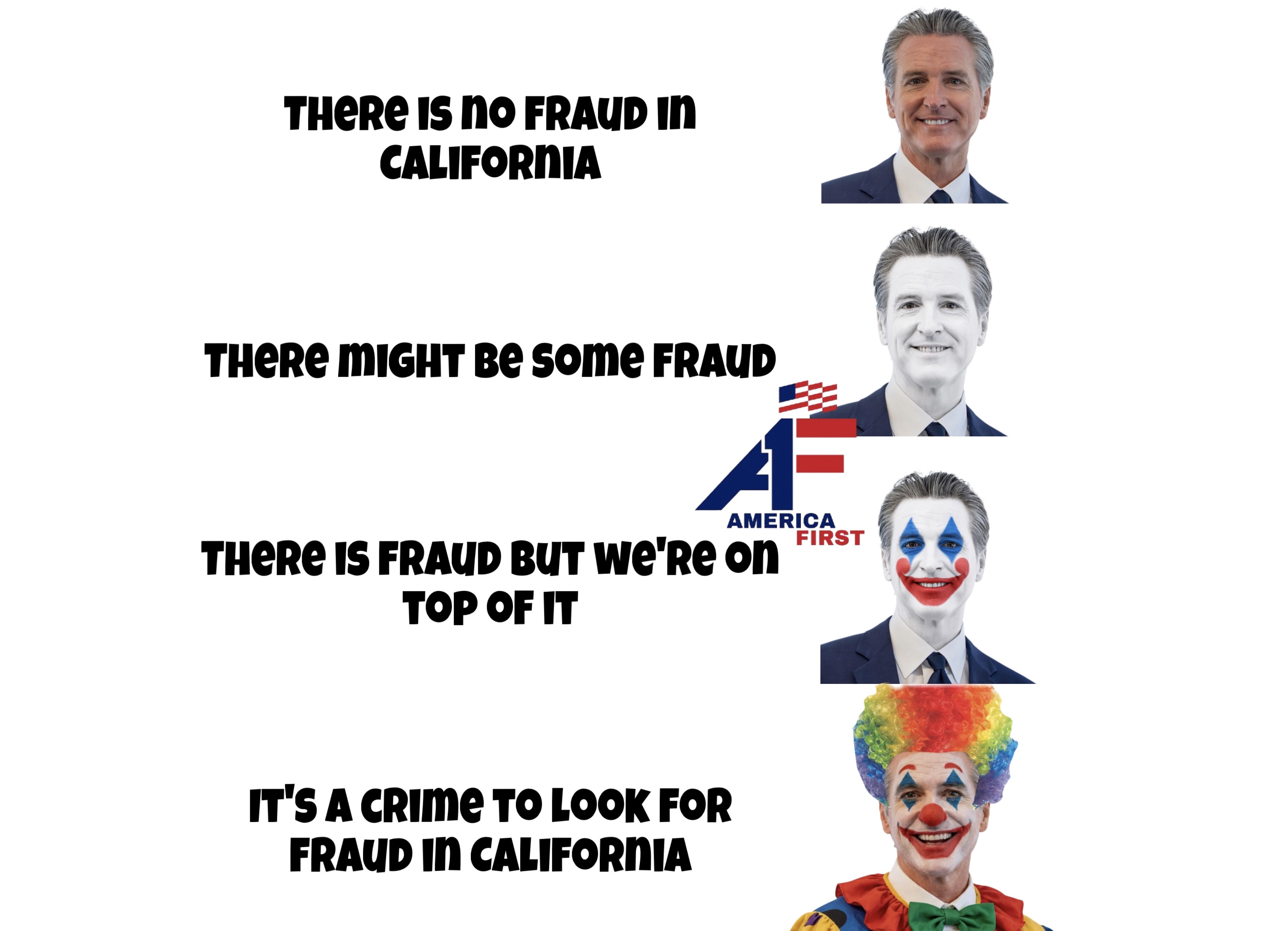
California is attempting to legislate against the possibility of a similar reckoning. Governor Newsom is not proposing laws to prevent the fraud; he is proposing laws to prevent the discovery of the fraud. It is a strategy of deflection that suits a man whose tenure has been marked by a preference for narrative over substance. When the data shows failure, when the money has vanished, and the social outcomes remain bleak, the solution is not to audit the program, but to hide the operators.
The media establishment, with few exceptions, acts as an accomplice in this erosion of accountability. The coverage of this legal shift reveals a troubling asymmetry in modern journalism. When independent investigators produce video evidence, documentation, and on-the-ground reporting that challenges the progressive consensus on immigration or social welfare, the immediate response of the mainstream press is not to verify the evidence, but to debunk the messenger. The questions posed by establishment journalists are frequently framed not to uncover the truth, but to reassure the public that the institutions are functioning.
They ask questions that assume the bill has nothing to do with hiding corruption. They ask questions that assume the safeguards are sufficient. They ask questions that assume truth is a perfect defense, ignoring the reality that in a "lawfare" environment, the cost of defending the truth is often the point. This is not journalism; it is public relations. It is a protective shield for a political ideology that fears scrutiny.
The pattern is well established. Allegations from conservative or independent sources are treated as presumptively false, exaggerated, or conspiratorial. The burden of proof is shifted. While the media demands exhaustive evidence from those exposing waste, they require zero evidence from the politicians who perpetuate it. They hold the government to a standard of assumption while holding the citizen to a standard of proof. This asymmetry has shattered public trust in the legacy press. The public is not stupid. When they see a politician shielding a program from oversight, and a media class defending that shield, they understand the dynamic. They understand that the ruling class is protecting its own.
Gavin Newsom is the avatar of this broken system. He is a man who lectures the rest of the country about morality and governance while his own state’s finances and social fabric unravel. He attempts to project intellectual superiority while signing legislation that assumes the public is too dangerous to be trusted with the truth. This is not the behavior of a competent administrator; it is the behavior of a political class terrified of accountability.
The American experiment was founded on the radical idea that the people could be trusted with the truth. It was founded on the belief that power is suspect and that the citizen has a duty to interrogate the state. To remove the public’s ability to see where their tax dollars are spent is to sever the last remaining thread of the social contract.
This is not a partisan issue; it is a matter of basic logic and fiscal sanity. No taxpayer, regardless of their political affiliation, should tolerate a system where a politician can greenlight the expenditure of public funds without allowing the public to see the recipient. No American who values the First Amendment should tolerate a law that equates accurate reporting with harassment.
The people of this nation must remember that this money is not the government's to spend as it sees fit in the dark. It is the sweat of the working man and woman, confiscated under threat of law. To shield its recipients from scrutiny is not compassion; it is theft. It is time to demand that the walls of secrecy come down. It is time to demand that a man who hides the machinery of government from the people be viewed not as a visionary, but as what he truly is: a threat to the Republic.