The distinction between honest political evolution and calculated deception marks the difference between a statesman and a demagogue. In the current landscape, voters are often asked to accept that a politician’s past statements, however extreme, are merely relics of a less mature perspective, stumbles of youth, or rhetoric taken out of context. Yet when the substance of those past statements reveals a coherent, radical worldview that stands in direct opposition to the values of the constituency that politician now seeks to represent, scrutiny is not merely warranted; it is a civic duty.
The case of James Talarico presents a clarifying example of this phenomenon. Talarico has, in recent cycles, attempted to position himself as a measured, faith-oriented progressive; a man of the people concerned with kitchen-table issues and the moral fabric of the community. He seeks to frame his political philosophy through the lens of scripture, presenting a persona of moderation and spiritual contemplation. This public image, however, is a carefully constructed façade that obscures a far more radical ideological core. It is a core that is fundamentally hostile to the economic system that has generated unprecedented prosperity and to the foundational principles of American liberty.
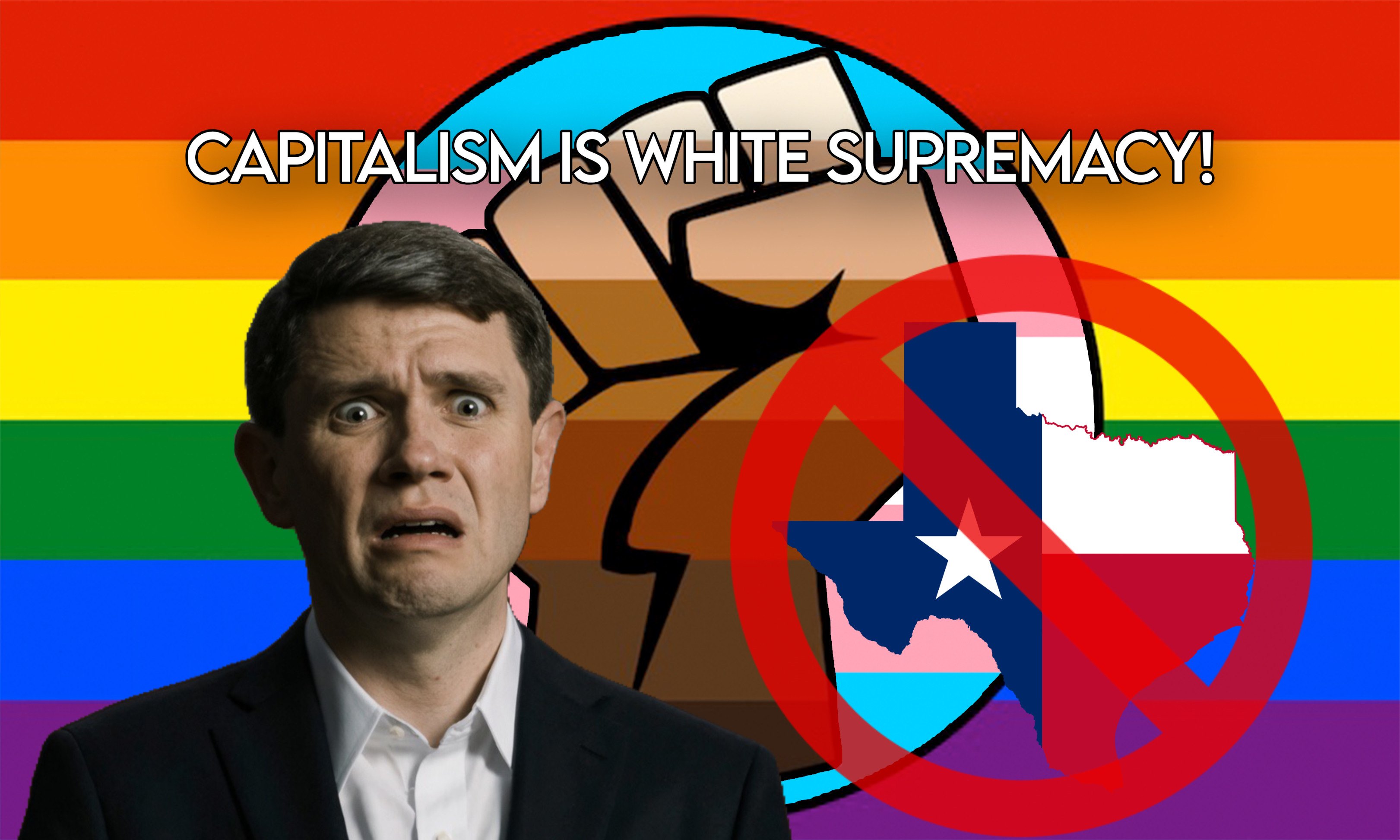
To understand the danger Talarico represents, one must look not to his campaign slogans or his polished speeches, but to his unguarded moments and his past affiliations. In 2020, during a period of intense social upheaval when the far-left felt emboldened to speak its aims openly, Talarico articulated a vision that he now desperately seeks to memory-hole. He linked climate change, capitalism, and white supremacy, describing them not as distinct issues requiring distinct solutions, but as interconnected “oppressive systems” that must be understood together and, in his words, dismantled.
This was not a policy disagreement. This was a declaration of war on the American way of life. To equate the system of free enterprise, which is built upon voluntary exchange, private property, and individual initiative, with a vile racial ideology is not merely historically illiterate; it is a malicious attempt to poison the public discourse. It is an effort to burden the economic engine of human flourishing with the sins of state-enforced discrimination, thereby making the abolition of capitalism a supposed prerequisite for racial justice.
The historical record is clear to those who do not intentionally obscure it. Capitalism is not responsible for slavery or segregation; those evils are as old as human civilization, and they were perpetuated in the United States through the coercive power of the state. It was government legislation that codified Jim Crow. It was government-enforced redlining that barred Black Americans from property ownership. It was the restriction of market participation, not the expansion of it, that created barriers to economic empowerment. To blame voluntary trade for the crimes of state coercion is a logical error of the highest order, yet it is the foundational assumption upon which Talarico and his ilk base their calls for revolutionary change.
Talarico’s subsequent retreat from these comments has been less a repudiation of the ideology and more a strategic acknowledgment that such open radicalism is a political liability in Texas. His campaign has characterized the remarks as “cringey” or having “missed the mark,” yet he has offered no substantive explanation for why he no longer believes capitalism is white supremacy. He has not articulated a new understanding of economic history. He has not explained how the tenets of free enterprise shifted from being oppressive to acceptable in his view. The absence of this intellectual journey reveals the truth: the views have not changed. The presentation has.
This is not a phenomenon unique to Talarico. It is a calculated methodology of the modern progressive movement. Unable to win elections on the merits of their statist, regulatory agenda, candidates across the country are engaging in a strategy of ideological camouflage. They adopt the language of “pragmatism” and “common ground” during the campaign season, only to reveal their allegiance to radical activism once the polls have closed. They run on fixing potholes while planning to dismantle the energy sector. They speak of "unity" while harboring a vision of America as a fundamentally flawed, inherently bigoted nation that must be remade in their image.
This deception extends to Talarico’s exploitation of religious language. A candidate who truly respected the scriptural traditions he invokes would recognize the dignity of the individual, the sanctity of private property, and the virtue of honest labor. Instead, Talarico twists biblical verses to manufacture a sense of collective guilt, attempting to shame the electorate into supporting policies that expand government control and diminish personal freedom. He uses the language of charity and compassion to justify the coercive redistribution of wealth, ignoring the fact that charity, by definition, is voluntary. To force a man at the point of a government gun to fund a program is not charity; it is compulsion. It is the very antithesis of the moral law he claims to champion.
The danger of James Talarico lies not in his effectiveness but in his dishonesty. He is a wolf in shepherd’s clothing, a radical anti-capitalist posing as a moderate public servant. His belief that the free market is a system of oppression places him not in the mainstream of American political thought, but in the extreme fringe of illiberal ideology. For an elected official to hold such views is concerning; for him to conceal them in order to gain power is an insult to the voters he purports to serve.
Patriotism requires a clear-eyed assessment of those who seek to lead. It demands that logic and reason prevail over emotion and sentimentality. In the case of James Talarico, a clear-eyed assessment reveals a politician whose foundational beliefs are incompatible with American prosperity, liberty, and truth. He is not a moderate. He is a radical who has learned to smile for the camera. The voters of Texas must see through the façade, for the stakes are far too high to be governed by a man who despises the very system that made this nation great.